
That Frustrating Moment When Your Garage Door Won't Stay Closed
You press the button on your remote, watch the garage door glide down, and then — just inches from the floor — it stops and reverses right back up. You try again. Same thing. Maybe you try holding the wall button, and it works, but the remote won't cooperate. Or maybe it reverses no matter what you do.
This is one of the most common garage door complaints we hear from homeowners in Oceanside, and the good news is that it's almost always fixable. The tricky part is figuring out which of several possible causes is behind the problem. Let's walk through the most likely culprits, what you can check yourself, and when it's time to call in a professional.
Understanding Why Garage Doors Reverse
Modern garage door openers are designed with safety mechanisms that prevent the door from closing on people, pets, or objects. Federal regulations have required these safety features since 1993, and they work through two primary systems:
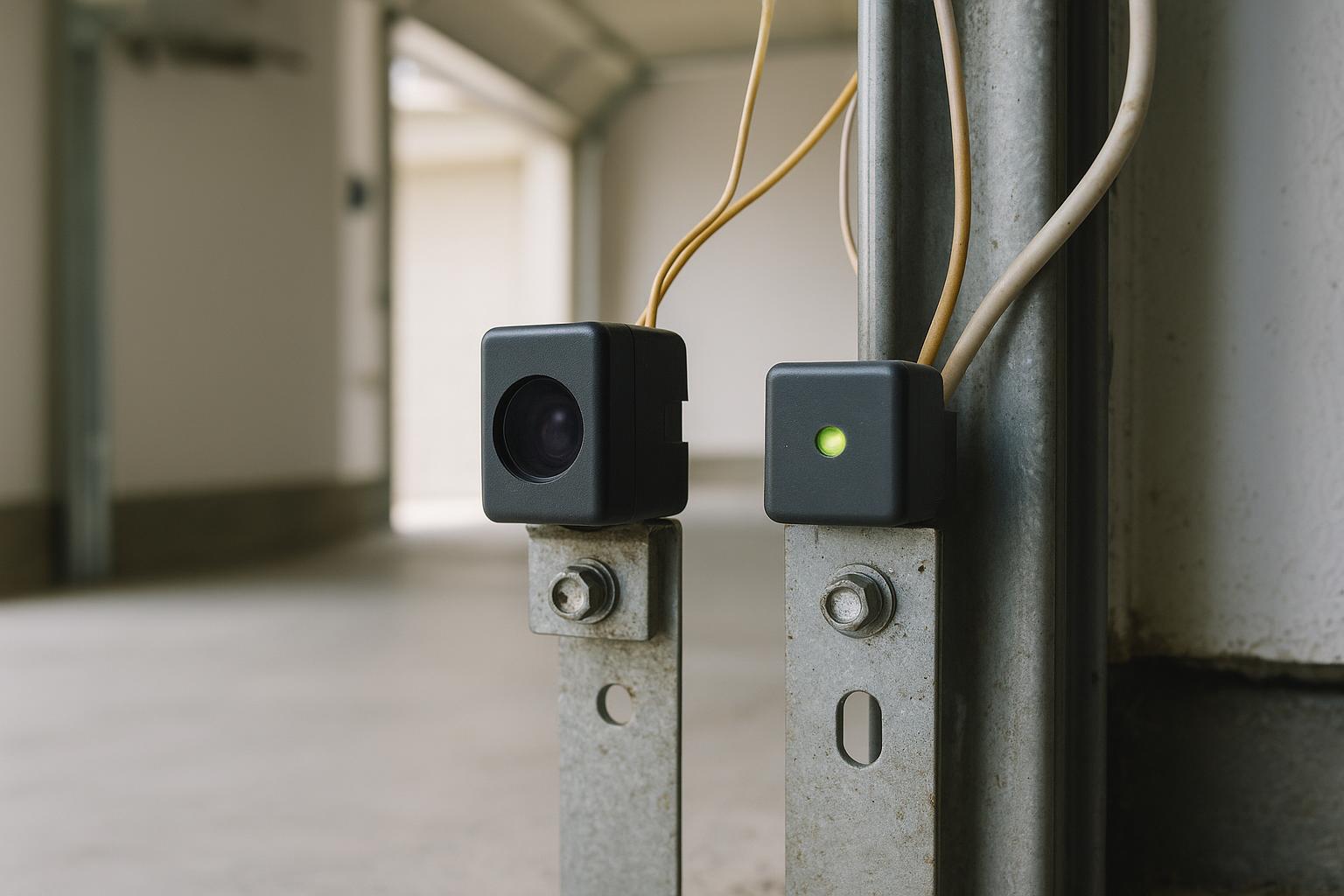
- Photo-eye sensors: Two small sensors mounted near the bottom of the door tracks that send an invisible beam across the opening. If something breaks the beam, the door reverses.
- Auto-reverse force settings: The opener monitors how much resistance the door encounters while closing. If it detects too much resistance, it assumes something is in the way and reverses.
Both systems are essential for safety, but when they malfunction or fall out of adjustment, they can cause your door to reverse even when nothing is actually blocking it.
Check Your Photo-Eye Sensors First
In our experience, misaligned or dirty photo-eye sensors cause the majority of garage door reversal issues. These small devices sit about six inches off the ground on either side of the door opening, and they're surprisingly easy to knock out of alignment.
Signs the sensors are the problem
- The opener light blinks multiple times after the door reverses
- The door closes fine when you hold down the wall-mounted button but reverses when using the remote
- One or both sensor lights are off or flickering
What you can do
- Clean the lenses. Dust, cobwebs, and grime build up on the sensor lenses over time. Here in Oceanside, salt air and coastal moisture can accelerate this. Wipe both lenses gently with a soft cloth.
- Check alignment. Both sensors need to point directly at each other. Most sensors have a small LED light — typically green when properly aligned and amber or red when misaligned. Gently adjust the sensor brackets until both lights are solid.
- Look for obstructions. Make sure nothing is blocking the beam path between the two sensors. Even a leaf or a small toy can trigger the safety reverse.
- Inspect the wiring. Check that the wires running from each sensor to the opener unit are intact and securely connected. Damaged wires are a common issue, especially if they run along the floor where they can get stepped on or run over.
Force Settings May Need Adjustment
If your sensors check out fine but the door still reverses, the problem might be with the opener's close-force setting. This controls how much resistance the opener will tolerate before reversing the door.
Over time, garage doors can become heavier due to worn springs, increased friction in the tracks, or temperature changes. When the door requires more force to close than the opener expects, it interprets the extra resistance as an obstruction and reverses.
Most openers have adjustment screws or dials — usually labeled "close force" or "down force" — on the back or side of the motor unit. You can try increasing the close force slightly, but be cautious. Setting it too high defeats the purpose of the safety feature. If you're unsure, this is a good time to call a technician.
Worn or Broken Springs Can Be the Hidden Cause
Your garage door springs do the heavy lifting — literally. They counterbalance the weight of the door so the opener doesn't have to work as hard. When springs weaken or break, the door becomes significantly heavier, and the opener struggles to control it.
Signs of spring problems include:
- The door feels unusually heavy when you try to lift it manually
- The door closes too quickly or slams down
- You notice a gap in one of the torsion springs above the door
- You heard a loud bang from the garage (a common sign of a spring breaking)
Important safety note: Garage door springs are under extreme tension and can cause serious injury if handled improperly. Spring replacement is not a DIY job. If you suspect a spring issue, contact a qualified garage door technician.
Track and Roller Issues
Bent tracks, worn rollers, or debris in the track can all create enough friction to trigger the auto-reverse mechanism. Walk along both tracks and look for:
- Visible bends or dents in the metal tracks
- Rollers that are cracked, chipped, or no longer spinning freely
- Dirt, leaves, or small objects lodged in the track
You can clean the tracks with a damp cloth and remove any debris, but bent tracks and worn rollers typically require professional attention to repair or replace safely.
The Opener Itself May Be Failing
If you've checked the sensors, force settings, springs, and tracks and the problem persists, the issue may be with the opener's logic board or motor. Garage door openers typically last 10 to 15 years, and internal components can wear out over time.
Signs your opener may need repair or replacement include:
- Inconsistent behavior — sometimes it works, sometimes it doesn't
- Unusual grinding or humming noises from the motor
- The opener is more than 15 years old
- Frequent issues that keep recurring despite repairs
Modern garage door openers offer significant upgrades over older models, including quieter operation, smartphone connectivity, battery backup, and improved safety features. If your opener is aging, replacement might be more cost-effective than repeated repairs.
When to Call a Professional in Oceanside
Some garage door troubleshooting is safe and straightforward for homeowners — cleaning sensors, checking for obstructions, and clearing debris from tracks. But many reversal issues involve components that are dangerous to work on without proper training and tools.
You should call a professional if:
- You suspect a broken or weakened spring
- The tracks are bent or misaligned
- Force adjustments don't resolve the issue
- The opener is making unusual sounds or behaving erratically
- You're not comfortable working with the mechanical components
At Oceanside Garage Door, we diagnose and fix reversal issues every week. Whether it's a simple sensor realignment or a complete spring replacement, we'll identify the root cause and get your door closing properly again. We serve homeowners throughout Oceanside, Carlsbad, Vista, San Marcos, Encinitas, and Escondido with prompt, reliable service.
Don't Ignore a Reversing Garage Door
A garage door that won't close all the way is more than an inconvenience — it's a security risk. An open garage is an invitation for theft, and it exposes your home to weather, pests, and other problems. While it might be tempting to disconnect the safety sensors as a quick fix, doing so removes critical protections that keep your family safe.
If your garage door keeps reversing and you can't pinpoint the cause, give us a call. We'll get it sorted out quickly so you can get back to your day with a garage door that works the way it should.