
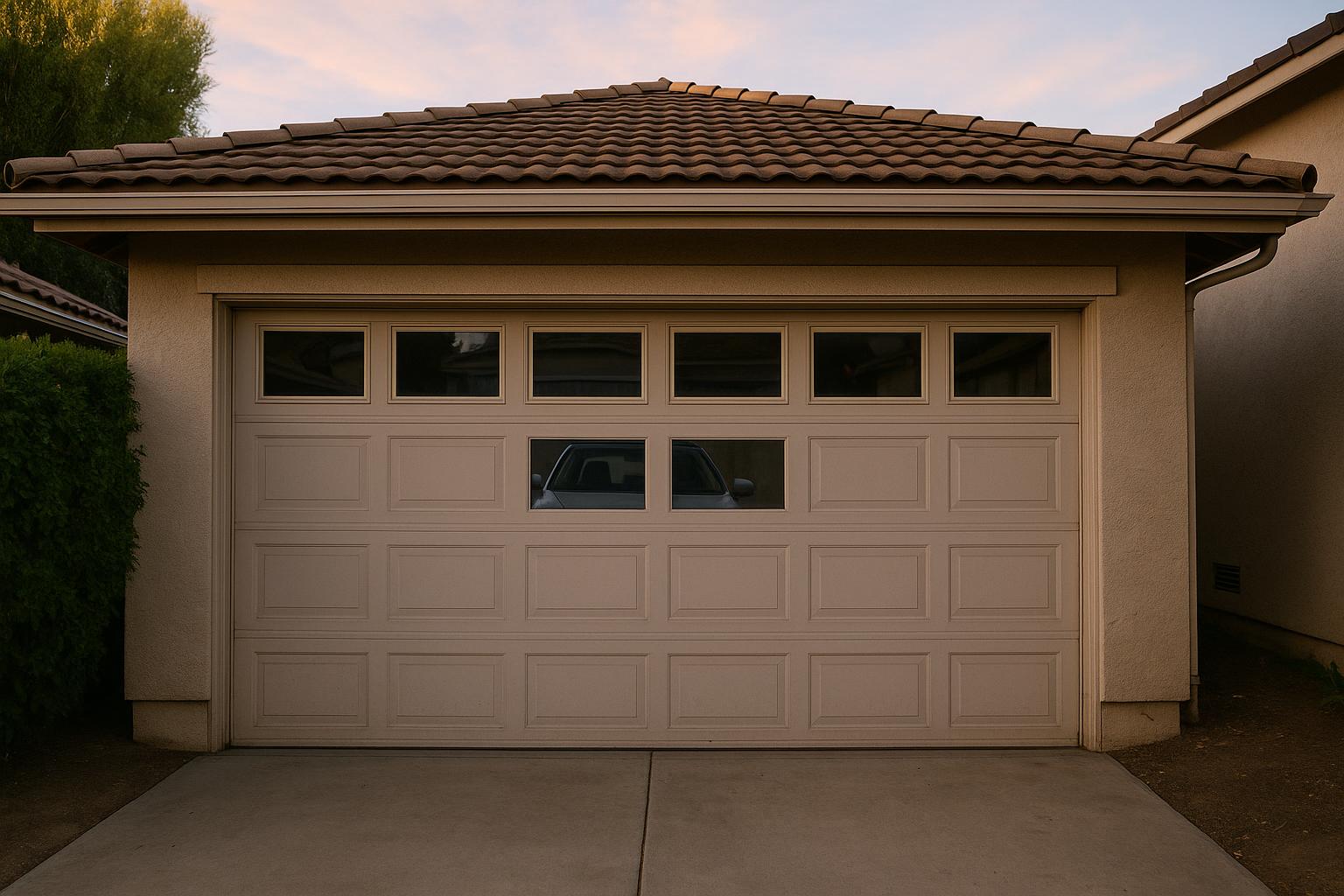
You're Running Late and Your Garage Door Won't Budge
It's 7:15 a.m. You've got your coffee, your keys, and exactly enough time to make it to work. You press the button on your garage door opener and… nothing. Or maybe it groans, shudders, and refuses to move. Few things are more stressful than being trapped in your own garage when you're already running behind schedule.
This is one of the most common calls we get at Oceanside Garage Door, especially during the cooler months when temperatures drop overnight. The good news is that most causes of a garage door that won't open in the morning are fixable — and some you can even troubleshoot yourself before calling a professional.
Common Reasons Your Garage Door Won't Open
Before you panic, it helps to understand what might be going on. Here are the most frequent culprits we see when homeowners in Oceanside and surrounding areas call us about a stuck garage door.
1. The Remote Batteries Are Dead
It sounds almost too simple, but dead batteries in your garage door remote are one of the most common reasons the door won't respond. If you press the button and get no indicator light on the remote, swap in fresh batteries before doing anything else.
If the wall-mounted button inside the garage still works but the remote doesn't, batteries are almost certainly the issue.
2. The Photo-Eye Sensors Are Misaligned or Blocked
Your garage door has two small sensors near the bottom of the tracks, one on each side. These photo-eye sensors send an invisible beam across the opening to detect obstructions. If they're bumped out of alignment, dirty, or blocked by a cobweb or debris, your door may refuse to close — or in some cases, refuse to move at all.
Check that both sensor lights are on and steady. If one is blinking, gently adjust it until the light holds solid. Wipe the lenses with a clean cloth while you're at it.
3. The Door Is Locked
Many garage doors have a manual lock mechanism — a handle or latch on the inside of the door that slides a bar into the track. If someone accidentally engaged the lock, the opener will try to lift the door but won't be able to. You'll usually hear the motor straining. Check the lock and disengage it before trying again.
4. Cold Weather Has Affected the Components
While Oceanside enjoys mild weather compared to much of the country, temperatures can still dip into the 40s on winter mornings. Cold weather causes metal components to contract, lubricant to thicken, and weatherstripping to stick to the garage floor. If your door seems sluggish or stuck on chilly mornings but works fine by afternoon, temperature is likely playing a role.
Applying a silicone-based lubricant to the tracks, rollers, and hinges can help prevent this. Avoid using WD-40, which can attract dirt and grime over time.
5. A Broken Torsion Spring
If you heard a loud bang from the garage — maybe last night or even a few days ago — a torsion spring may have snapped. The springs do the heavy lifting when your garage door opens, and without them, the opener motor simply can't raise the door on its own.
Do not attempt to replace garage door springs yourself. These components are under extreme tension and can cause serious injury. This is a job for a trained technician.
6. The Opener Has Lost Power
Check whether the garage door opener unit is plugged in. It's not uncommon for the cord to get accidentally unplugged, especially if you've been working in the garage. Also check your circuit breaker panel — a tripped breaker will cut power to the opener without any obvious warning signs.
7. The Track Is Bent or Obstructed
Inspect the metal tracks on both sides of the door. If you see a visible bend, dent, or gap, the door's rollers can't travel smoothly and the door may jam. Even small obstructions — a stray bolt, a piece of debris — can prevent the door from moving properly.
Minor track issues can sometimes be gently tapped back into shape, but significant damage usually requires professional repair or track replacement.
What You Can Safely Do Right Now
If you're stuck and need to get your car out immediately, here's a quick checklist:
- Check the remote batteries and try the wall button.
- Look at the sensors — clean and realign them if needed.
- Make sure the door isn't manually locked.
- Verify the opener has power — check the outlet and breaker.
- Use the emergency release cord. Every garage door opener has a red cord hanging from the rail. Pulling it disconnects the door from the opener so you can lift it manually. Pull the cord toward the door, then carefully lift the door by hand.
Important: If a spring is broken, the door will be extremely heavy. Do not force it. If the door won't lift easily by hand after pulling the emergency release, stop and call a professional.
When to Call a Professional
Some garage door problems are straightforward, but others involve components that are dangerous to work with or require specialized tools. You should call a garage door technician if:
- You suspect a broken spring (you heard a loud snap or the door feels impossibly heavy)
- The tracks are visibly damaged or separated from the wall
- Cables are frayed, loose, or hanging
- The opener motor runs but the door doesn't move at all
- You've tried basic troubleshooting and the problem persists
At Oceanside Garage Door, we offer same-day and emergency service throughout Oceanside, Carlsbad, Vista, San Marcos, Encinitas, and Escondido. We know that a garage door that won't open isn't just an inconvenience — it can leave you stranded or compromise your home's security.
Preventing Morning Garage Door Failures
The best way to avoid getting stuck is to keep your garage door maintained before problems develop. Here are a few habits that go a long way:
- Lubricate moving parts every three to four months with a silicone-based spray.
- Test the balance of your door by disconnecting the opener and lifting the door halfway. It should stay in place. If it falls or rises, the springs may need adjustment.
- Inspect the hardware — tighten loose bolts, check for worn rollers, and look for fraying cables.
- Keep the tracks clean and free of debris.
- Schedule annual maintenance with a professional who can catch small issues before they turn into morning emergencies.
Regular maintenance is especially important for homes near the coast. Here in Oceanside, the salt air can accelerate corrosion on metal components, making routine inspections even more valuable.
Don't Let a Stuck Garage Door Ruin Your Day
A garage door that won't open in the morning is stressful, but it's usually fixable — often faster than you'd expect. Start with the simple checks, use the emergency release if you need to get out quickly, and don't hesitate to call in a pro for anything involving springs, cables, or track damage.
If your garage door gave you trouble this morning — or if it's been acting up and you want to prevent a full breakdown — give Oceanside Garage Door a call. We'll get it diagnosed, repaired, and running reliably so tomorrow morning goes a lot smoother.