
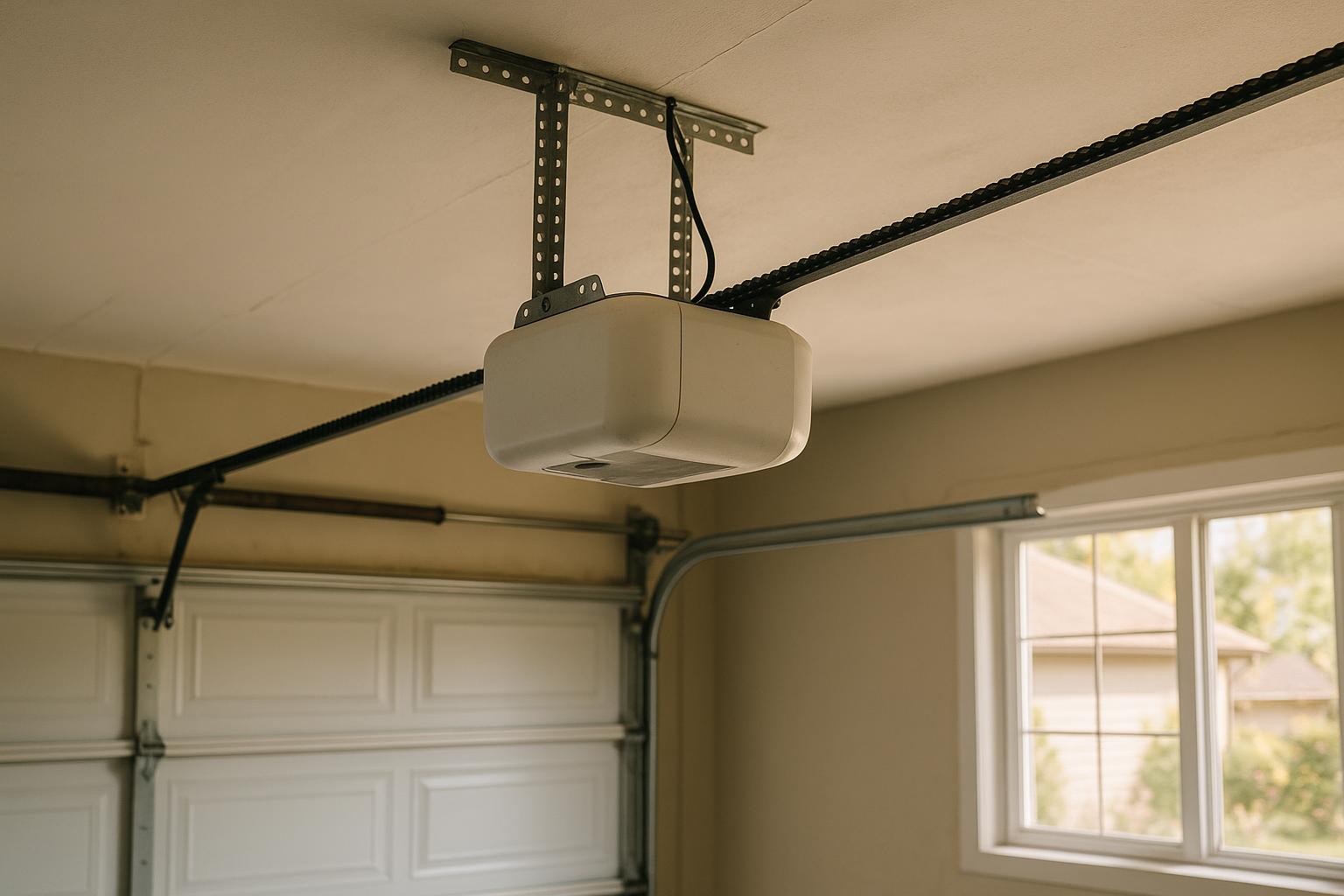
Your Garage Door Opener Won't Last Forever
Your garage door opener is one of those things you don't think about until it stops working. You press the button, the door goes up, you pull into the garage, and life moves on. But like every mechanical device in your home, your opener has a limited lifespan — and when it starts to fail, it usually gives you some warning signs first.
If you've been noticing strange behavior from your garage door opener, you're not alone. It's one of the most common calls we get from homeowners across Oceanside and the surrounding communities. The good news is that catching the problem early can save you from getting locked out of your garage — or dealing with a much bigger repair bill down the road.
How Long Do Garage Door Openers Typically Last?
Most garage door openers last between 10 and 15 years, depending on the brand, how often you use them, and how well they've been maintained. If your opener is approaching that age range and you're starting to notice issues, it may be nearing the end of its useful life.
That said, age alone isn't always the deciding factor. A well-maintained opener can sometimes exceed 15 years, while a neglected one might start failing after just seven or eight. The key is paying attention to how it performs day to day.
7 Warning Signs Your Garage Door Opener Is Failing
1. The Opener Runs But the Door Doesn't Move
If you hear the motor running but the door stays put, something has gone wrong internally. This could mean the drive gear has stripped out, the chain or belt has broken, or there's a disconnect between the opener and the door itself. In some cases, the issue is a simple fix. In others, it signals that the opener's internal components are worn beyond repair.
2. Excessive Noise or Grinding Sounds
All garage door openers make some noise, but there's a difference between normal operating sounds and something that sounds like metal grinding on metal. If your opener has suddenly become much louder than usual, or you hear rattling, squealing, or grinding, the motor or drive mechanism may be wearing out. Chain-drive openers tend to be noisier than belt-drive models, but a sudden increase in volume from any type of opener is worth investigating.
3. The Door Opens or Closes Intermittently
Does your garage door work perfectly some days and refuse to cooperate on others? Intermittent operation is a classic sign of an opener that's on its way out. This can be caused by failing circuit boards, worn-out electrical connections, or a motor that overheats and shuts down. It's frustrating because the problem seems to come and go, but inconsistent performance almost always gets worse over time.
4. The Opener Vibrates Excessively
Some vibration during operation is normal, but if your opener is shaking noticeably or the mounting hardware is rattling loose, the internal motor may be struggling. Excessive vibration puts additional stress on the opener's mounting bracket and the ceiling structure it's attached to, which can create secondary problems if left unaddressed.
5. The Remote or Wall Button Requires Multiple Presses
If you find yourself pressing the remote or wall button two, three, or four times before the opener responds, the issue might not be the remote itself. While dead batteries are always worth checking first, repeated unresponsiveness often points to a failing logic board inside the opener unit. If replacing the batteries and reprogramming the remote doesn't solve the problem, the opener likely needs professional attention.
6. The Door Moves Slower Than Usual
A garage door that used to open and close at a normal speed but has gradually slowed down is telling you something. A sluggish opener can indicate motor wear, lubrication issues, or problems with the drive system. In Oceanside, where the coastal air can accelerate corrosion on metal components, this is something we see fairly often.
7. The Opener Doesn't Respond to Safety Sensors
Modern garage door openers are equipped with photoelectric safety sensors near the bottom of the door tracks. These sensors prevent the door from closing on a person, pet, or object. If your opener ignores the sensors — or if the sensors seem to malfunction regularly — it could be a wiring issue or a sign that the opener's control board is failing. This is a safety concern that should be addressed immediately.
Should You Repair or Replace Your Opener?
This is the question most homeowners ask when their opener starts acting up, and the answer depends on a few factors:
- Age of the opener: If your opener is less than 8 years old and the issue is isolated, a repair usually makes sense. If it's 12 years old or more, replacement is often the better investment.
- Cost of the repair: A good rule of thumb is that if the repair costs more than half the price of a new opener, you're better off replacing it.
- Frequency of problems: If this is the first issue you've had, a repair is reasonable. If you've been calling for service every few months, it's time for a new unit.
- Safety features: Older openers may lack modern safety features like auto-reverse, rolling code technology, and battery backup. Upgrading to a new opener gives you better security and peace of mind.
What to Expect From a New Garage Door Opener
If you do decide to replace your opener, today's models offer significant improvements over units from even a decade ago. Here's what you can look forward to:
- Quieter operation: Belt-drive and direct-drive openers are dramatically quieter than older chain-drive models, which is a big deal if you have living space above or next to the garage.
- Smart home integration: Many new openers connect to your smartphone via Wi-Fi, allowing you to open, close, and monitor your garage door from anywhere.
- Battery backup: Power outages happen, and a battery backup ensures you can still operate your garage door when the electricity goes out.
- Enhanced security: Rolling code technology changes the access code every time you use the remote, making it virtually impossible for someone to intercept and duplicate your signal.
Don't Wait Until You're Stuck
A failing garage door opener is more than an inconvenience — it can be a security risk and a safety hazard. If you've noticed any of the warning signs above, it's worth having a professional take a look before the problem leaves you stranded outside your garage on a busy morning.
At Oceanside Garage Door, we handle opener repairs and installations for homeowners throughout Oceanside, Carlsbad, Vista, San Marcos, Encinitas, and Escondido. Whether your opener needs a quick fix or a full replacement, we'll give you an honest assessment and get the job done right. Give us a call today to schedule a service appointment.