
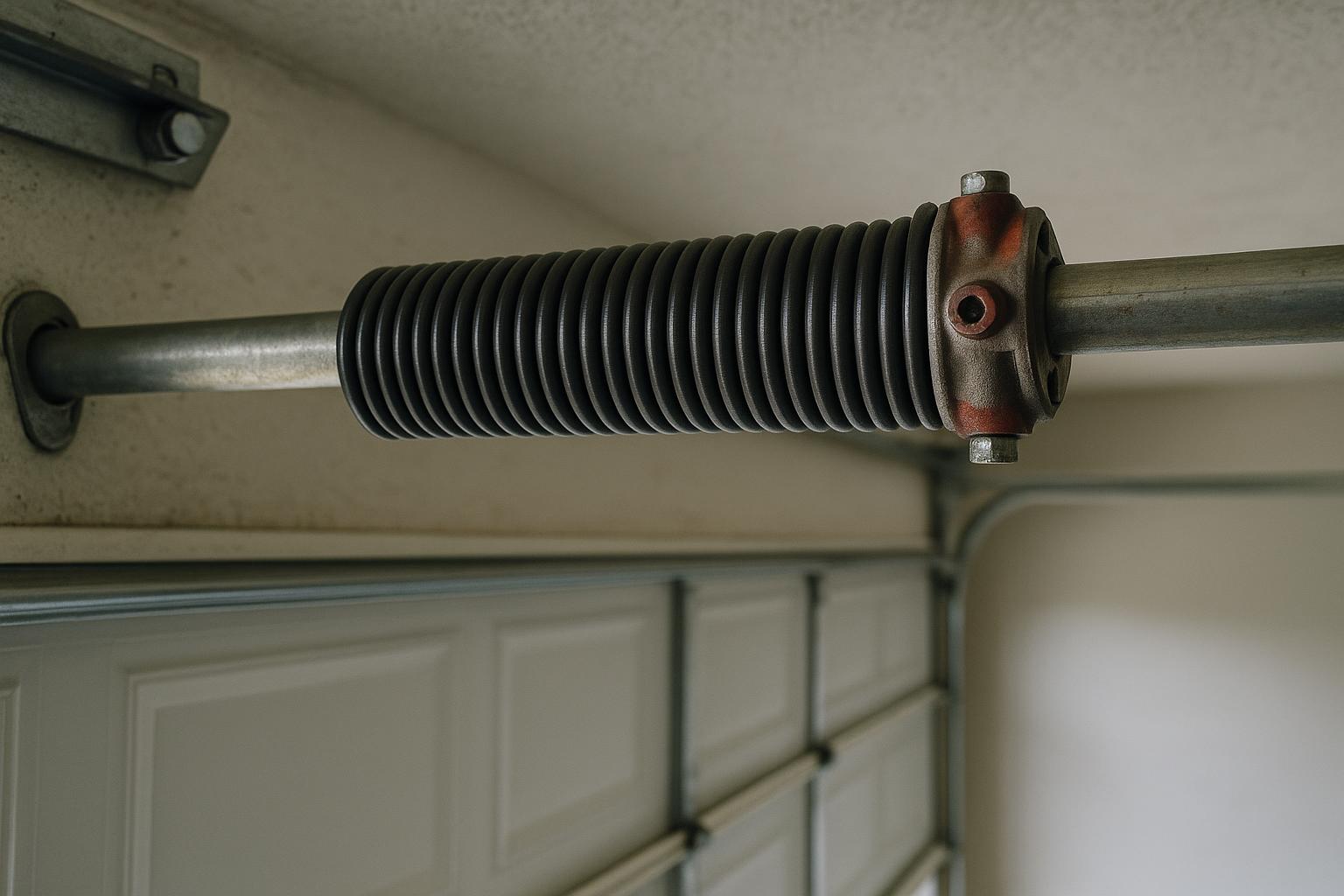
Your Garage Door Springs Are Doing More Work Than You Think
Every time you open or close your garage door, the springs are doing the heavy lifting — literally. A standard two-car garage door can weigh between 150 and 250 pounds, and it's the springs that counterbalance all that weight so your opener doesn't have to do it alone. Over time, those springs wear out, and when they fail, your garage door can become inoperable or even dangerous.
For homeowners in Oceanside, where many of us use our garages daily — whether it's for parking, storage, or as a workshop — understanding when to replace your garage door springs can save you from unexpected breakdowns and costly emergency repairs.
How Long Do Garage Door Springs Last?
The lifespan of a garage door spring is measured in cycles. One cycle equals one full open and one full close of the door. Most standard torsion springs are rated for approximately 10,000 cycles, which translates to roughly 7 to 10 years of typical use.
However, several factors can shorten or extend that lifespan:
- Frequency of use: If you open and close your garage door four or more times per day, your springs will wear out faster than average.
- Spring quality: Higher-quality, high-cycle springs (rated for 20,000 or even 30,000 cycles) last significantly longer but cost more upfront.
- Climate and corrosion: Living near the coast in Oceanside means salt air is a real factor. The moisture and salt can accelerate rust and corrosion on metal springs, weakening them over time.
- Maintenance habits: Springs that are regularly lubricated and inspected tend to last longer than those that are neglected.
Torsion Springs vs. Extension Springs: What's the Difference?
There are two main types of garage door springs, and knowing which kind you have helps you understand what to expect when it's time for replacement.
Torsion Springs
These are mounted on a metal shaft directly above the garage door opening. They use torque to lift the door and are the more common type found in modern garage door systems. Torsion springs are generally considered safer and more durable than extension springs.
Extension Springs
These are mounted on either side of the door, running parallel to the horizontal tracks. They stretch and contract to provide lifting force. Extension springs are more common in older garage door systems and can be more dangerous when they break because they're under significant tension and can snap outward if safety cables aren't installed.
Regardless of which type you have, both will eventually need replacement. If your garage door system is older and still uses extension springs, it may be worth upgrading to torsion springs during your next replacement for improved safety and longevity.
Warning Signs Your Garage Door Springs Are Failing
Springs rarely fail without warning. Here are the most common signs that your garage door springs are nearing the end of their life:
- The door feels heavier than usual: If your garage door is difficult to lift manually or your opener seems to be straining, the springs may be losing tension.
- Visible gaps in the spring coils: A healthy torsion spring has tightly wound coils. If you notice gaps or separation between the coils, the spring is stretched and weakening.
- The door opens unevenly: If one side of the door lifts higher than the other, one spring may be weaker or broken while the other is still functioning.
- Loud bang from the garage: A broken spring often makes a loud, startling noise — like a firecracker going off in the garage. If you hear this, do not try to operate the door.
- The door won't stay open: If your garage door slides down when you try to leave it partially open, the springs can no longer hold the weight properly.
- Rust or corrosion on the springs: This is especially common for homes in Oceanside and nearby coastal communities like Carlsbad and Encinitas. Corroded springs are weaker and more prone to sudden failure.
Can You Replace Garage Door Springs Yourself?
This is one of the most common questions we get, and the answer is a firm no — at least not safely. Garage door springs are under extreme tension. A torsion spring that snaps during an improper repair attempt can cause serious injury or even death. Every year, DIY garage door spring repairs send people to the emergency room.
Professional technicians have the specialized tools, training, and experience to replace springs safely. They also know how to properly calibrate the tension so your door operates smoothly and your opener isn't overworked.
At Oceanside Garage Door, we always recommend leaving spring replacement to the pros. It's one of the most dangerous garage door repairs, and the cost of professional service is well worth the peace of mind.
What to Expect During a Professional Spring Replacement
If you schedule a spring replacement with a qualified technician, here's what the process typically looks like:
- Inspection: The technician will examine your current springs, cables, and hardware to assess the full scope of the repair.
- Spring removal: Using specialized winding bars and safety equipment, the old springs are carefully unwound and removed.
- New spring installation: New springs are installed and wound to the correct tension based on your door's weight and size.
- Balance testing: The technician will test the door's balance to make sure it opens and closes smoothly and stays in place when partially open.
- Lubrication and final check: All moving parts are lubricated, and the entire system is checked for any additional issues.
The whole process usually takes about an hour, and most reputable companies — including ours — will also inspect your cables, rollers, and other hardware while they're there to catch any other problems before they become emergencies.
How to Extend the Life of Your Garage Door Springs
While springs won't last forever, there are steps you can take to get the most out of them:
- Lubricate your springs every few months with a silicone-based garage door lubricant. This reduces friction and helps prevent rust — especially important in our coastal Oceanside climate.
- Schedule annual maintenance. A professional tune-up once a year can catch early signs of wear before a spring breaks unexpectedly.
- Minimize unnecessary cycles. Every time the door opens and closes, it uses one cycle. If you can reduce unnecessary trips, your springs will last longer.
- Consider high-cycle springs when it's time for replacement. They cost a bit more but can last two to three times longer than standard springs.
Don't Wait for a Breakdown
A broken garage door spring is more than an inconvenience — it can leave your home unsecured, your car trapped inside, and your daily routine disrupted. If your springs are showing signs of wear, or if it's been seven years or more since they were last replaced, it's time to have them inspected.
Oceanside Garage Door serves homeowners throughout Oceanside, Carlsbad, Vista, San Marcos, Encinitas, and Escondido with fast, reliable spring replacement and garage door maintenance. We show up on time, explain what needs to be done, and get your door back in working order — no surprises, no upselling.
If you're not sure about the condition of your springs, give us a call. We'll take a look and give you an honest assessment so you can make the right decision for your home.